Kayaking for Relaxation: Finding Calm on the Water
Step onto the water, take one slow stroke, and feel the noise of the day fall away. Kayaking for relaxation is not about distance or speed — it is about letting the rhythm of a paddle do what an hour of scrolling never will.
There is a reason people describe their best paddle sessions in the same breath as meditation, long baths, or a walk in the woods. Kayaking sits in a rare category of outdoor activity where the effort is gentle enough to quiet the mind but engaging enough to pull you fully into the present moment. This guide is for anyone who wants to use the water not as a workout arena but as a genuine reset — a place to breathe, drift, and come back to themselves.
Why Kayaking Is Uniquely Relaxing
Most outdoor sports ask something of you — pace, performance, a finish line. Kayaking at a relaxed pace asks almost nothing except that you show up. The physical motion is gentle and repetitive: reach, pull, glide. Reach, pull, glide. That slow bilateral rhythm is the same mechanic researchers link to reduced cortisol levels and the kind of calm focus you get from walking or swimming at an easy clip.
Then there is the water itself. The concept of blue mind — popularised by marine biologist Wallace J. Nichols — describes the measurably calmer, more creative mental state that proximity to water produces. Being on the water, not just near it, deepens that effect. You are surrounded on all sides by a surface that moves, reflects light, and absorbs sound in ways that land simply does not. The ambient noise level on a quiet lake at dawn is genuinely healing.
Finally, a kayak puts you at water level. Not on a boat looking down, not on a bank looking across — but right there, six inches above the surface, close enough to trail your fingers in. That intimacy with the natural world is hard to replicate. It is slow travel in the truest sense, and slow is what relaxation actually needs.
How to Structure a Relaxing Paddle Session
The single biggest mistake people make when they want a relaxing kayak trip is treating it like any other outing with a route, a distance target, and a turnaround time. Relaxation and agendas are enemies. Here is how to strip the session back to what actually works.
- Go early or go golden. Early morning on flat water is close to sacred. The surface is glassy before the wind picks up, boat traffic is zero, and wildlife is active. The golden hour before sunset runs a close second — the light alone makes the paddle worth it.
- Set no distance goal. Decide on a time window — say, ninety minutes — and then paddle wherever feels good within that window. Turn around when you feel like it, not when a map tells you to.
- Bring coffee, not a phone. A thermos of coffee or tea in the hatch is one of the small rituals that turns a paddle into a genuine escape. Your phone, on aeroplane mode or left in the car, stays out of the cockpit.
- Choose your company carefully. Solo paddling is deeply meditative for many people. If you prefer company, go with someone who matches your pace and does not need constant conversation. A relaxed paddle with the right person can feel like a shared exhale.
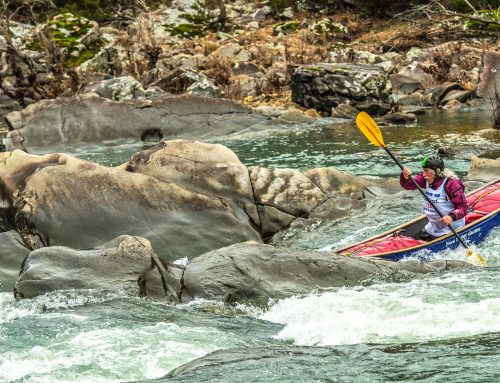
- Stay on flat water. Save the whitewater for a different day. For relaxation, you want calm lakes, sheltered bays, slow-moving rivers, or tidal backwaters with no surf. The goal is glide, not challenge.
Equipment matters too. A wide, stable recreational kayak lets you sit comfortably without constant balance adjustments — your brain can relax when your body does not have to work hard to stay upright. See our picks in the best recreational kayaks guide if you are still choosing a boat.
Where to Find Tranquil Paddling Near You
The right location does most of the work. You cannot fully relax if you are dodging jet skis or fighting a headwind. These are the environments that consistently deliver the calm you are looking for.
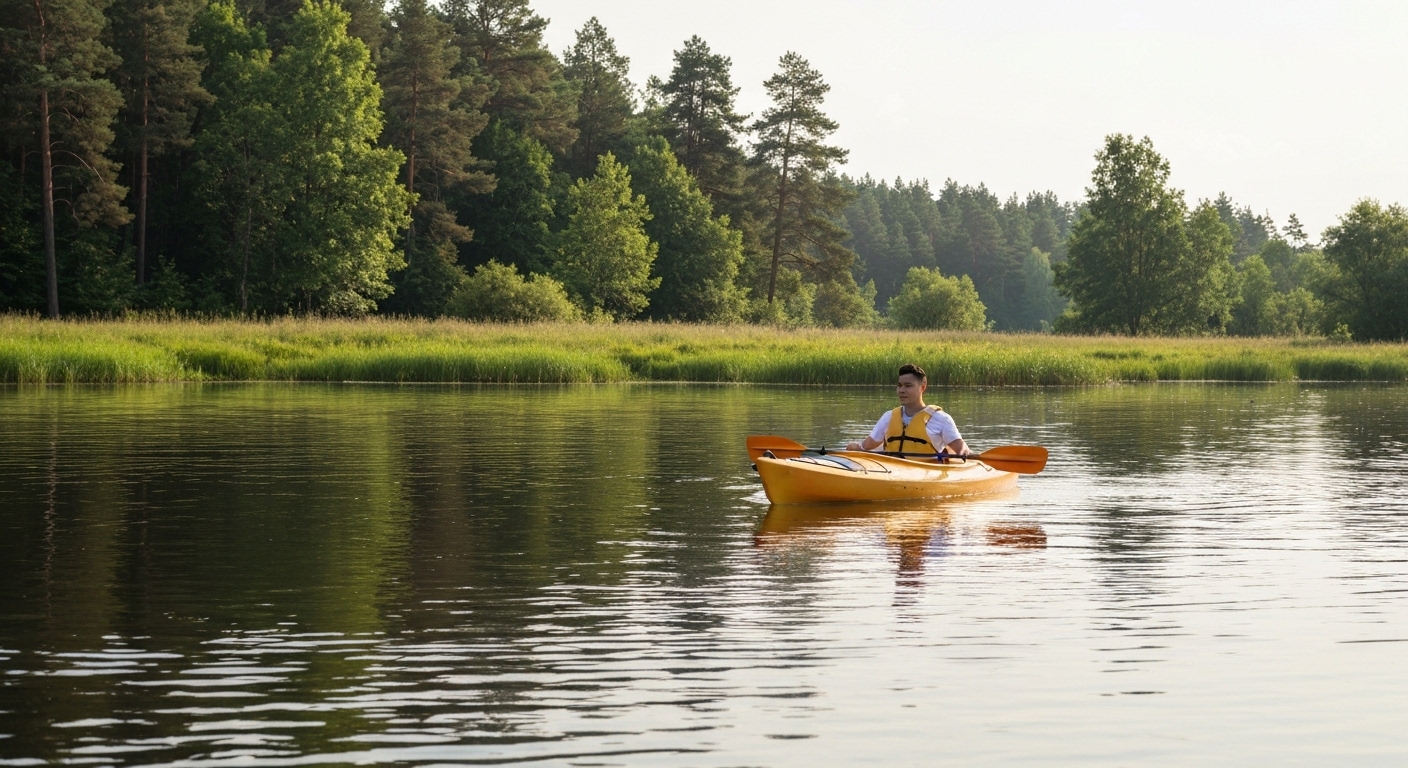
Calm lakes and reservoirs. Inland lakes — especially smaller ones off the main recreational radar — are the bread and butter of relaxing paddling. No tidal pull, no swell, and on a weekday morning often completely deserted. Look for state park lakes, reservoir access points, and wildlife management areas that allow non-motorised boats.
Sheltered coastal bays and estuaries. Coastal paddling does not have to mean ocean waves. Tidal bays, salt marshes, and estuaries are often completely flat and extraordinarily rich in wildlife. Herons, egrets, dolphins surfacing quietly nearby — these encounters are the kind that stay with you for days.
Slow rivers. A river with minimal current and no significant rapids is a conveyor belt of scenery. You paddle when you feel like it and drift when you do not. Canopied rivers in particular — where trees arch over the water — create a tunnel-like stillness that is almost dreamlike.
Mangroves and backwaters. If you are lucky enough to have access to mangrove channels or tidal backwaters, use them. The root systems dampen wave action entirely, the water is dark and still, and the sense of being inside the ecosystem rather than observing it from outside is unlike anything else in paddling.
Whatever location you choose, check our kayak guides for gear suited to your environment.
Mindful Paddling: Getting Out of Your Head and Onto the Water
Mindfulness has become a saturated word, but on the water it means something concrete and achievable: paying attention to what is actually in front of you instead of replaying the week in your head.
A few practices that actually work on a kayak:
- Count your strokes. Not obsessively, but for short stretches — ten strokes on each side, noticing the catch and the pull. The counting displaces rumination the way a mantra does in seated meditation.
- Watch the bow wake. The tiny V-shaped ripple your bow pushes out is endlessly variable. Watching it anchors you to the present pace of your paddling in a way that is almost hypnotic.
- Stop and float. Lay the paddle across the cockpit and just sit. Let the kayak drift. Listen to what is actually happening around you — wind in reeds, a fish breaking the surface, a distant bird call. Even two minutes of stillness mid-paddle resets the nervous system in ways that are measurable.
- Notice temperature and light. The way morning mist sits on the water. The temperature differential when you paddle into shadow. These sensory details pull you out of abstract thought and into the body, which is exactly where relaxation lives.
None of this requires any prior meditation experience. The water does the prompting. Your only job is to follow it.
The Mental Reset That Follows a Good Paddle
Ask anyone who paddles regularly why they keep doing it and the answer rarely leads with fitness. It leads with how they feel afterward. There is a particular quality of tiredness that a relaxed two-hour paddle produces — not the depleted exhaustion of a hard workout, but a clean, satisfied fatigue. Thoughts are slower in the good way. Perspective widens. Small frustrations that felt large before the water feel genuinely small after it.
This is not anecdotal. Moderate rhythmic exercise in natural environments has a well-documented effect on stress hormones, rumination, and mood. The combination of light physical effort, natural surroundings, and disconnection from screens puts the brain into a restorative mode that passive rest — sitting on a couch, scrolling — simply does not trigger.
A morning paddle before a difficult work week does not just improve the morning. It changes the tone of the days that follow. That is the compounding return that keeps people coming back to flat water with a paddle. For a full look at how paddling supports long-term wellbeing, read our piece on kayaking health benefits.
A Note on Gear: Comfort Is the Point
You do not need expensive equipment to paddle for relaxation, but you do need gear that stays out of your way. Discomfort — a hard seat, a too-narrow cockpit, a paddle that is too heavy — is the enemy of the mental state you are chasing. A few things worth getting right:
- Kayak stability. A wider hull means less micro-adjusting and more relaxing. Sit-on-top kayaks are particularly good for this — they are nearly impossible to capsize under normal flat-water conditions and easier to get in and out of.
- Seat comfort. An adjustable seat with decent lumbar support transforms a ninety-minute paddle. Many recreational kayaks come with reasonable seats; aftermarket upgrades are available and often worth the cost.
- Paddle weight. A lighter paddle — carbon or fibreglass — reduces arm fatigue on a longer drift and keeps the whole experience effortless.
- Sun and warmth. A hat, sunscreen, and a light layer make the difference between a paddle you cut short and one you wish would last longer.
The right setup means your attention stays on the water, not on whatever is bothering you about your equipment. Browse best recreational kayaks to find a stable, comfortable starting point.