
Buying An Isle Paddleboard
ISLE makes some of the most dependable mid-tier inflatable paddle boards on the market — and after paddling their lineup, we can see why they've built such a loyal following.
If you’ve spent more than ten minutes searching for an inflatable SUP, you’ve almost certainly run across ISLE. The San Diego brand has been at it since 2004, and their boards show up on “best of” lists constantly — but do they actually hold up on the water? We put in real sessions on the Pioneer and Explorer to find out.
Who Is ISLE and What Do They Make?
ISLE — short for International Surf and Loisirs Equipment — was founded in San Diego in 2004 by a group of surf and paddleboard enthusiasts who wanted to bring higher-quality boards to the recreational market at a price that didn’t require a second mortgage. Nearly two decades later, they’ve grown into one of the most recognized names in the inflatable SUP space, selling direct-to-consumer and through Amazon.
Their lineup covers most use cases you’d want to explore:
- Pioneer — The all-around workhorse and their best-seller. At 10’6″ and 32″ wide, it’s designed for calm flatwater, mild river currents, and casual bay paddling. This is the board that made ISLE’s reputation.
- Explorer — A longer, narrower touring shape (11′ or 11’6″) built for paddlers who want to cover distance. Less beginner-friendly but much more efficient once you’ve got your balance dialed in.
- Versa — A short, wide all-around board aimed at families and lighter paddlers who prioritize stability over tracking.
- Hub — Their largest offering, an oversized platform board designed for carrying two paddlers, yoga, or group activities on calm water.
The Pioneer and Explorer are where most buyers land, and they’re the two we’ll spend the most time on here. For a broader look at how ISLE compares to other makers, see our guide to the best paddle board brands on the market.
On-the-Water Performance: Stability, Glide, and Rigidity
The first thing most buyers want to know is simple: does it feel stiff, or does it flex and wobble underfoot? This matters more than almost any other spec on an inflatable board. A board that flexes loses energy with every stroke, makes tracking harder, and generally feels unstable — especially for newer paddlers.
ISLE uses what they call their Airctech construction, a dual-layer drop-stitch PVC build inflated to 15 PSI. In our testing, the Pioneer at full inflation felt genuinely solid underfoot — no noticeable flex when we shifted weight toward the nose or tail, and no bounce or trampoline effect in mild chop. It’s not quite at the level of a carbon-rail premium board like a Bluefin Cruise Carbon or a Red Paddle Co Elite, but it’s meaningfully stiffer than the budget inflatables you’ll find under $400.
Stability: The Pioneer’s 32″ width gives it a stable, forgiving platform. We had beginners on it during our testing sessions — including one paddler who’d never stood on a SUP before — and not one of them swam in the first 20 minutes. That’s a real-world data point. The Explorer is narrower and more tippy by design, so we’d only recommend it once you’ve got 10+ hours of paddling under your belt.
Glide and tracking: The Pioneer tracks reasonably well for an all-around shape, especially with the included center fin installed. It won’t out-glide a touring board, but for casual flatwater paddling and bay cruising it stays on course without constant correction. The Explorer is noticeably better here — the longer waterline and touring shape make it efficient to paddle over distance.
Weight capacity: The Pioneer is rated to 275 lbs and the Explorer to 300 lbs, which is realistic for their sizes. If you’re toward the upper end of those limits, stability and rigidity both decrease, so size up or look at their Hub model. Our paddle board size chart can help you match board volume and weight capacity to your body size.
Build Quality and What Comes in the Kit
One area where ISLE consistently earns good marks is build quality. The dual-layer PVC on their current lineup feels substantially more robust than single-layer boards at similar price points. The seams are well-finished, the D-rings and bungee cord tie-down systems feel secure, and the traction pad on the Pioneer is generous and grippy without being rough on bare feet.
The included kit is also better than most competitors in the $700–$850 price range. What you get:
- Adjustable fiberglass paddle — Not carbon, but lighter and stiffer than the aluminum paddles that budget brands bundle in. A real step up that makes a difference on longer sessions.
- High-pressure pump — A dual-action pump that gets the board to 15 PSI in around 10–15 minutes. Not glamorous, but functional.
- Carry backpack — Sized to fit the rolled board, pump, fins, and leash. The shoulder straps are padded and wide enough to be comfortable even on a long walk to the water.
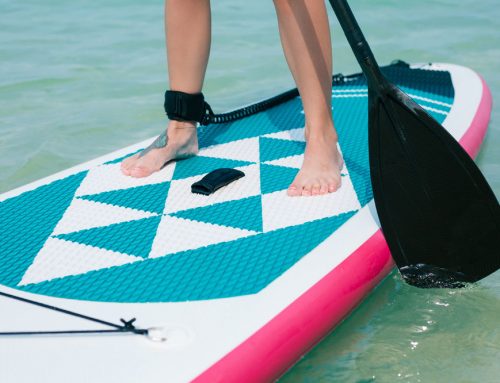
- Leash — A coiled ankle leash included standard. The American Canoe Association recommends always wearing a leash when paddling open water, and ISLE includes one rather than treating it as an upsell.
- Center fin and side bites — The tri-fin setup improves tracking and stability in mild chop. The center fin is tool-free and snaps in place reliably.
A few honest caveats: the pump gauge can read a touch low, so we recommend cross-referencing with a separate pressure gauge when you’re new to the board. And while the backpack fits everything, it’s a snug pack — rolling the board tightly is a learned skill that takes a few sessions to feel natural.
For the full picture on what makes a good inflatable kit, check our breakdown of the best inflatable paddle boards of this year.
ISLE vs Budget Boards vs Premium Brands
ISLE lives in what we’d call the “trustworthy mid-tier” — above the $300–$450 budget crowd (Goplus, Retrospec, Wowoks) but below the premium segment ($1,000+) occupied by brands like Red Paddle Co, Starboard, and Naish. Here’s how that shakes out in practice:
ISLE vs budget brands: The gap is real. Budget inflatables typically use single-layer PVC, lighter-gauge drop-stitch cores, and aluminum paddles. They inflate to 10–12 PSI and flex noticeably underfoot. ISLE’s dual-layer Airctech construction and 15 PSI rating produce a meaningfully stiffer, more confidence-inspiring ride. If you plan to paddle more than a handful of times per year, the ISLE is worth the extra $250–$350.
ISLE vs iRocker: This is the comparison we get asked about most often. Both brands occupy similar price territory, both offer dual-layer builds, and both have loyal user bases. Our honest read: iRocker’s Sport and All-Around Ultra boards are slightly stiffer (higher PSI rating, heavier-duty seams), and their customer service has historically been easier to reach. ISLE boards tend to have slightly better-looking aesthetics and the Pioneer’s width makes it a touch more beginner-stable. It’s close — neither is a wrong choice.
ISLE vs premium brands: If you’re comparing ISLE to a Red Paddle Co Ride or a Starboard Zen, you’ll feel the difference in rigidity, especially in choppy conditions. Premium boards use MSL fusion or RSS batten systems that push stiffness to near-hardboard levels. Whether that difference is worth $400–$600 more depends entirely on how serious your paddling is. For flatwater recreation, ISLE is plenty. For fitness paddling, long-distance touring, or rough water, the premium difference is noticeable.
For a side-by-side look at how the top brands stack up, our guide to the best paddle board brands breaks it down by use case and budget.
Who Should Buy an ISLE Paddle Board?
ISLE makes the most sense for a specific kind of buyer — and that buyer is more common than you might think. Here’s who we’d confidently recommend an ISLE board to:
- First-time paddlers — The Pioneer’s wide, stable platform and complete kit make it one of the best entry points into the sport. You’re not fighting the board while also learning to balance, and you’re not burdened with shopping for accessories separately. See our full guide to the best beginner paddle boards for more options at this level.
- Casual weekend paddlers — If you’re heading out to a lake or bay 10–20 times a year with family or friends, the ISLE Pioneer is exactly the right amount of board. You don’t need a $1,200 performance board for flat-water summer days.
- Travelers and car-toppers — The pack-down size and carry backpack make ISLE boards practical for road trips, vacation rentals, and situations where you need to roll everything into a bag.
- Paddlers stepping up from a budget board — If you started on a $350 board and want a genuine upgrade without going full premium, ISLE lands in exactly the right gap.
Who might want to look elsewhere: if you’re an experienced paddler looking for performance-level rigidity, touring efficiency at competitive speed, or planning to do whitewater or ocean surf, you’ve outgrown what ISLE is designed for. In that case, spend up to Red Paddle Co or Starboard, or consider a hardboard altogether.
Bottom line: ISLE has earned their reputation honestly. The Pioneer in particular is one of the most beginner-friendly all-around inflatables available in the $700–$850 range, and the Explorer is a legitimate step-up option for paddlers ready to chase distance and efficiency. Neither board will disappoint if your expectations are matched to what they’re built to do.
Frequently Asked Questions
Are ISLE paddle boards any good?
Yes — ISLE makes genuinely solid mid-tier inflatable paddle boards. Their dual-layer Airctech construction produces a noticeably stiffer ride than budget single-layer boards, and their complete kits include better accessories than most competitors at the same price point. They’re not the stiffest boards on the market, but for recreational flatwater paddling, they perform well above their price class.
Which ISLE board is best for beginners?
The ISLE Pioneer (10’6″ x 32″) is the best choice for most beginners. Its wide platform gives you the stability to focus on learning technique rather than fighting for balance, the included kit has everything you need to get on the water, and it’s forgiving in mild chop. The Explorer and Versa are also options, but the Pioneer is the sweet spot for new paddlers.
Is the ISLE Pioneer worth it?
For most recreational paddlers, yes. The Pioneer sits in the $750–$850 range and delivers build quality and performance that justify the price over budget alternatives. If you plan to paddle regularly — even just on summer weekends — the ISLE Pioneer is worth every dollar. If you’re unsure you’ll stick with the sport, a budget board is a lower-risk way to find out first.
How does ISLE compare to iRocker?
ISLE and iRocker are the two most frequently compared brands in this price tier — and it’s genuinely close. iRocker boards tend to be slightly stiffer and their customer service has a strong reputation. ISLE’s Pioneer is slightly wider and arguably better for absolute beginners. Both use dual-layer PVC construction and include solid kits. You can’t go wrong with either — personal preference and specific model specs should drive the decision.
Are ISLE boards durable?
Yes, ISLE boards hold up well with normal use. The dual-layer PVC construction resists abrasion and minor impacts better than single-layer budget boards, and ISLE backs their boards with a two-year manufacturer warranty. Common sense care — rinsing with fresh water after saltwater use, storing out of direct UV exposure, and not over-inflating past 15 PSI — will keep an ISLE board in good shape for many seasons.