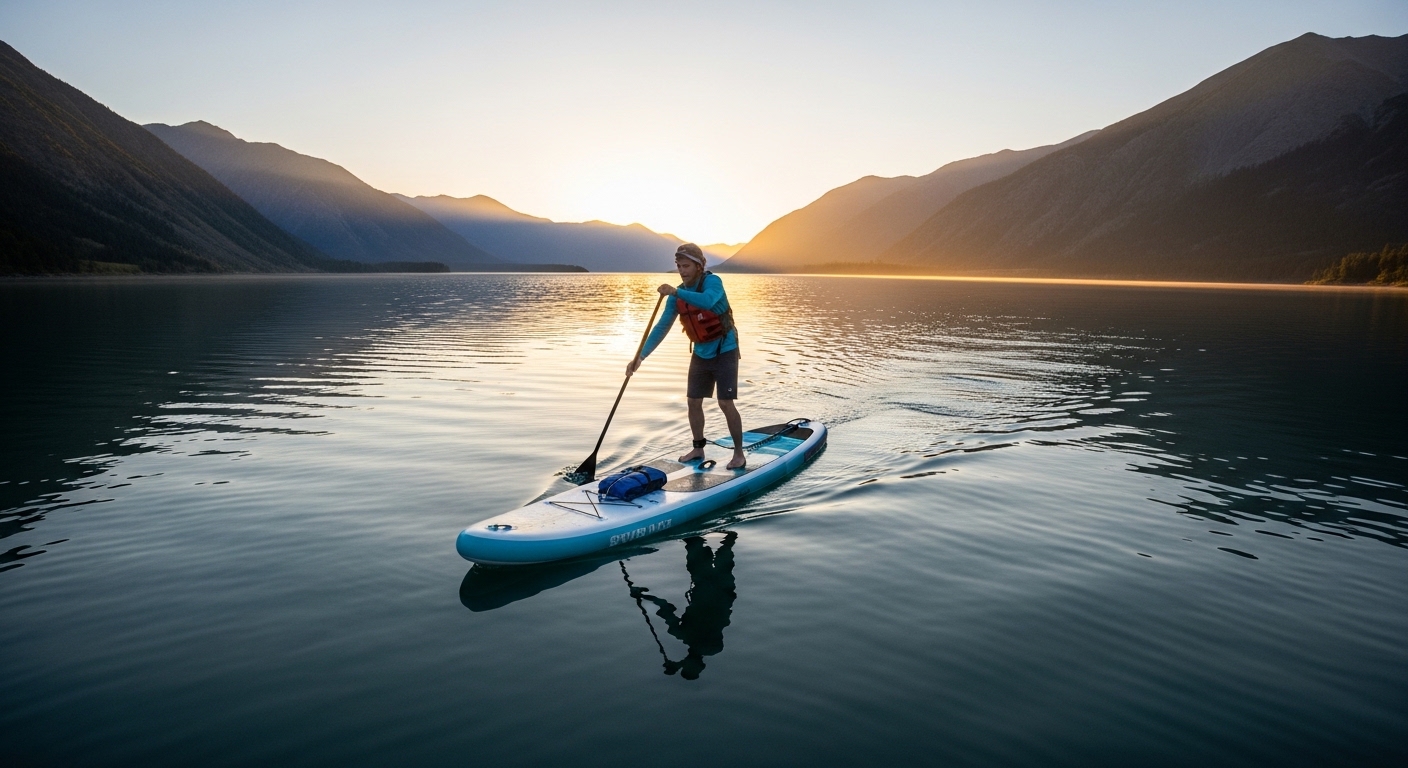
Buying An Irocker Paddleboard
iRocker makes it easy to overspend on the wrong board — or to land exactly the right one for a few hundred less than you expected. Here is how to choose.
iRocker has been one of the most recognizable names in inflatable SUP since around 2016, and for good reason: the boards are well-built, the kits are generous, and the company backs everything with a two-year warranty that is actually honored. The problem is the lineup has grown. You now have four distinct product families, each aimed at a different type of paddler, and the list prices can make your eyes water before you factor in the sales that run almost constantly. This guide walks you through every major iRocker line, who each one is built for, how to size correctly, what you actually get in the box, and the honest downsides you should weigh before clicking buy. For a broader look at how iRocker stacks up against Atoll, Red, and others, see our iRocker brand review.
iRocker's Four Lines at a Glance
Before getting into detail, here is the short version of what each family is designed to do:
- All-Around — the everyday workhorse. Balanced, stable, handles flatwater and mild chop equally well. Best starting point for most paddlers.
- Cruiser — longer, wider, and built for tandem use or solo paddlers who want maximum stability and cargo room. Popular with anglers and families.
- BLACKFIN — iRocker’s premium line. Carbon rails, stiffer drop-stitch construction, faster glide, higher weight limits. Costs more but performs noticeably better.
- NAUTICAL — the entry-level option. Lighter packaging, simpler accessories, lower price. Fine for calm lakes and casual use, less capable than the other lines.
Every line is an inflatable — iRocker does not make hardboards. At 15 PSI, the premium boards are rigid enough that most paddlers cannot tell the difference from fiberglass on flat water.
All-Around: The One Most Buyers Should Start With
The iRocker All-Around comes in three widths — 10’6″ × 32″, 11′ × 33″, and 11′ × 34″ — and covers a weight range from roughly 130 lbs to 240 lbs depending on the size. The 32″ wide version is the sweetest spot for a solo paddler in the 160–200 lb range who wants a board that tracks reasonably well without feeling like a barge.
Construction is triple-layer PVC with a woven drop-stitch core. It inflates to 15 PSI and stays stiff enough for yoga, light surfing, and river runs — though iRocker recommends the All-Around primarily for flatwater and light ocean use.
The stock kit is one of the best in the mid-price segment: a dual-action hand pump, a three-piece fiberglass/nylon paddle, a coiled leash, a rolling backpack, and a repair kit. The paddle is not carbon, which matters if you plan to paddle more than a couple of times a week, but it is serviceable for casual use and easy to upgrade later.
Honest limitation: the All-Around is not a fast board. Its width and rocker profile prioritize stability over glide, which is the right trade-off for beginners but can feel sluggish once you develop a stronger stroke.
BLACKFIN: When You Want Performance Without Going Hardboard
The BLACKFIN line is where iRocker earns its premium reputation. The Model X (10’6″ × 32″) and Model XL (11′ × 34″) both feature carbon-reinforced rails, dual-layer woven drop-stitch construction, and higher maximum PSI — the result is measurably less flex underfoot compared to the All-Around.
On flat water you will feel the difference. The BLACKFIN tracks straighter, responds faster to rail-to-rail weight shifts, and carries speed more efficiently between strokes. If you are paddling more than once a week or covering distances above two miles regularly, the upgrade is worth the extra cost.
The BLACKFIN kit steps up accordingly: a carbon-fiberglass hybrid paddle replaces the all-nylon version, and the bag is a proper rolling duffel rather than a simple backpack. Weight limit on the XL reaches 485 lbs, which makes it a strong candidate if you are paddling with a dog or a child — see also our best boards for heavy riders guide for a wider comparison.
Honest limitation: the BLACKFIN list price regularly hits $999–$1,099, which is steep. Watch for iRocker’s semi-annual sales — boards often drop 20–30% — and the value proposition improves significantly.
Cruiser and NAUTICAL: Tandem Touring and Budget Entry
Cruiser: At 11′ × 36″ and a 500 lb weight capacity, the Cruiser is iRocker’s answer to family paddling. It is wide enough to stand side by side with a small child, load a cooler, or let a large dog roam without capsizing anything. Solo paddlers who prioritize yoga or fishing over speed also find the Cruiser’s platform useful — there is simply more room to work with.
The trade-off is obvious: width makes it slow. Crossing a lake solo on a Cruiser is a workout in the wrong direction. Use this board for what it is designed for — leisure, cargo, and two-up paddling — and it excels. Push it to be a touring board and you will be disappointed.
NAUTICAL: This is iRocker’s stripped-down entry point, currently the most affordable board in the lineup. The construction drops to dual-layer PVC, the paddle is an aluminum-shaft design rather than fiberglass, and the maximum weight limit is lower across sizes. For a paddler who genuinely wants to try SUP once or twice a summer on a calm lake, the NAUTICAL does the job.
For anyone who expects to paddle more than a handful of times a year, the All-Around is worth the additional spend. The NAUTICAL’s accessories in particular — the aluminum paddle, the single-chamber pump — show the budget shortcuts most clearly in use.
Sizing Within iRocker: Getting the Right Fit
iRocker sizes across two dimensions: length/width and volume. Here is the practical decision tree:
- Under 150 lbs, solo flatwater: 10’6″ × 32″ All-Around or BLACKFIN Model X. Either will feel lively and responsive at lighter weight.
- 150–220 lbs, general use: 10’6″ × 32″ is still fine, but the 11′ × 33″ All-Around gives you more volume buffer. Most paddlers in this range are happy on the All-Around or BLACKFIN Model X.
- 220–280 lbs, solo: Step up to the 11′ × 34″ All-Around or the BLACKFIN Model XL. The extra width prevents the nose from pearling in any chop.
- Over 280 lbs or paddling with passengers: Cruiser or BLACKFIN Model XL. Do not try to fit a heavy rider on a 32″ board — stability suffers and you will hate the experience.
iRocker publishes weight limits per board on its product pages, and the limits are realistic rather than inflated. Trust them. A board loaded to its listed maximum will paddle, but it will sit low and feel sluggish. For comfortable performance, stay at 80% of the rated limit or below.
For context on how iRocker’s sizing compares across the wider market, our paddle board brand comparison includes sizing tables across multiple manufacturers.
What You Get, What It Costs, and When to Buy
Kit contents: Every iRocker board above the NAUTICAL comes with a dual-action pump, adjustable paddle, coiled leash, center fin, backpack or rolling duffel, and a repair kit with patches and valve wrench. The BLACKFIN adds the carbon-blend paddle upgrade. Nothing about the kit is a throwaway — iRocker’s pumps are genuinely robust compared to the single-action pumps bundled by budget competitors.
Warranty: iRocker offers a two-year warranty covering manufacturing defects. Customer service reviews are broadly positive, with most warranty claims resolved via replacement rather than a runaround. This matters because inflatables do occasionally develop seam issues, and knowing the company will handle it is worth real money.
Pricing reality: iRocker list prices are high — the All-Around opens around $699, BLACKFIN around $999. However, iRocker runs sales constantly: Black Friday, Memorial Day, end-of-season in August, and occasional “flash” sales promoted through its email list. Discounts of 20–30% are routine. If you are not in a rush, sign up for iRocker’s newsletter and wait for a sale before buying at full price.
Honest cons to weigh:
- Weight: iRocker boards are heavier than many competitors at comparable price points. The All-Around runs around 22–25 lbs; the BLACKFIN Model XL tops 28 lbs. If you carry your board long distances from car to water, factor this in.
- List price shock: The sticker price before a sale can feel steep compared to budget brands. The quality difference is real, but it takes some experience on the water to appreciate it.
- No hardboard option: Committed performance paddlers who want to race or surf seriously will eventually outgrow any inflatable. iRocker is not the brand for that transition.