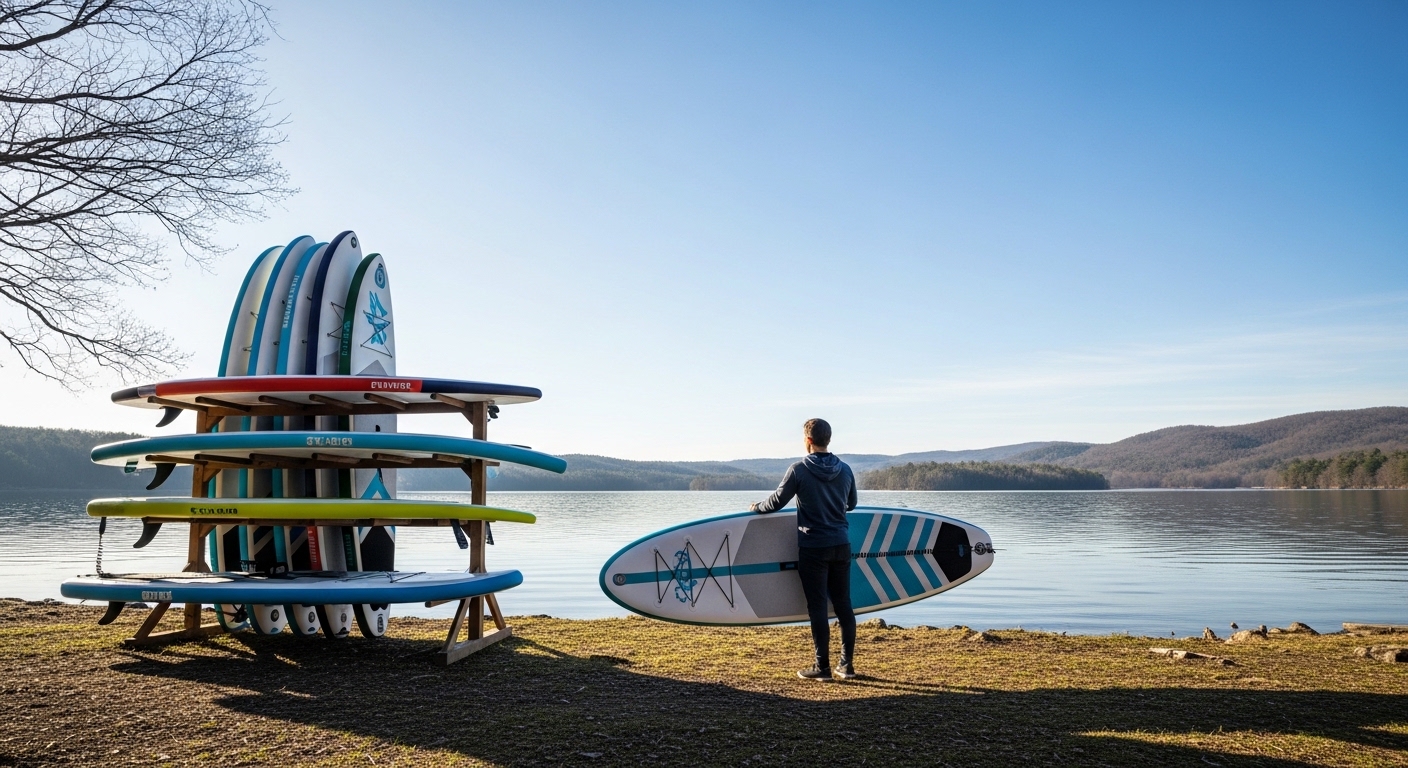
Buying A Paddleboard
Buying a paddle board is easier than it looks — once you know which three questions to answer first.
Walk into any paddle board search and you’ll hit a wall of jargon: displacement hull, dual-layer drop-stitch, touring shape, hard vs inflatable. None of it matters until you know how you’ll use the board. Answer that first, and every other decision clicks into place. This guide walks you through the whole process — from your first question to your first stroke — without the fluff.
Start Here: How Will You Actually Use It?
Before comparing specs, answer these three questions honestly:
- Where will you paddle? Flat lakes and calm bays are forgiving. Ocean surf and fast rivers demand specific shapes.
- How will you get there? If you drive a small car, live in an apartment, or fly to destinations, an inflatable almost always wins. If you have a truck, a garage, and a dock, a hard board is worth considering.
- What’s your goal? Casual cruising, fitness paddling, yoga, fishing, and racing each have a board built for them.
Most first-time buyers are casual all-arounders — calm water, weekend use, maybe occasional yoga. That profile has a very clear best answer, and you probably don’t need to spend hours deliberating.
Inflatable vs Hard: The Honest Breakdown
This is the biggest fork in the road. Here’s what each type actually delivers — see the full comparison at inflatable vs hard.
Inflatable Paddle Boards
- Pros: Rolls into a backpack, survives dings and bumps, soft landing if you fall, easy to store, great for travel
- Cons: Requires 10–15 minutes to inflate, slightly more flex underfoot (less noticeable on quality boards), can feel soft in heat if underinflated
Hard (Rigid) Paddle Boards
- Pros: Snappier response, faster glide, no inflation ritual, better for surfing and racing
- Cons: Needs roof racks or a truck, dents and dings from concrete and rocks, harder to store, pricier to repair
For most beginners: A quality dual-layer inflatable is the right call. Modern inflatables from reputable brands are stiff enough that you won’t notice the difference on flat water — and the lifestyle convenience is enormous.
Sizing: Length, Width, and Volume for Your Weight
Getting the size wrong is the most common first-time mistake. A board that’s too small will sink under you. One that’s too wide will be slow and awkward to paddle.
Width
Most all-around boards run 32–34 inches wide. Wider = more stable but slower. 32″ hits the sweet spot for most adult beginners. If you’re over 220 lbs or doing yoga, lean toward 34″.
Length
- Under 10′: Kids, small adults, or surf-style use
- 10’–11′: The all-around sweet spot — stable, maneuverable, fits most adults
- 11’–12’6″: Touring and fitness — better straight-line glide, slightly less stable
- 12’6″+: Racing and long-distance
Volume (Liters)
Volume determines float. A rough rule: your board’s volume in liters should be at least 1.1–1.4× your body weight in pounds. A 180 lb paddler wants roughly 200–250L minimum. See the full paddle board size chart for a detailed weight-to-volume breakdown.
Board Types: Match the Shape to the Use
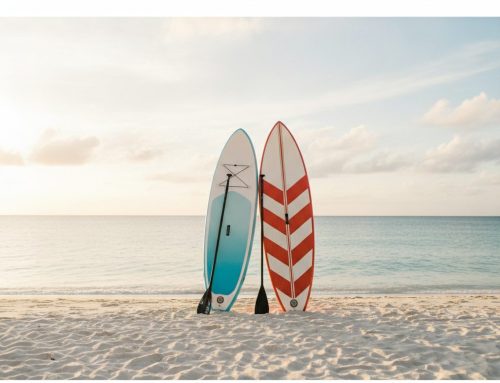
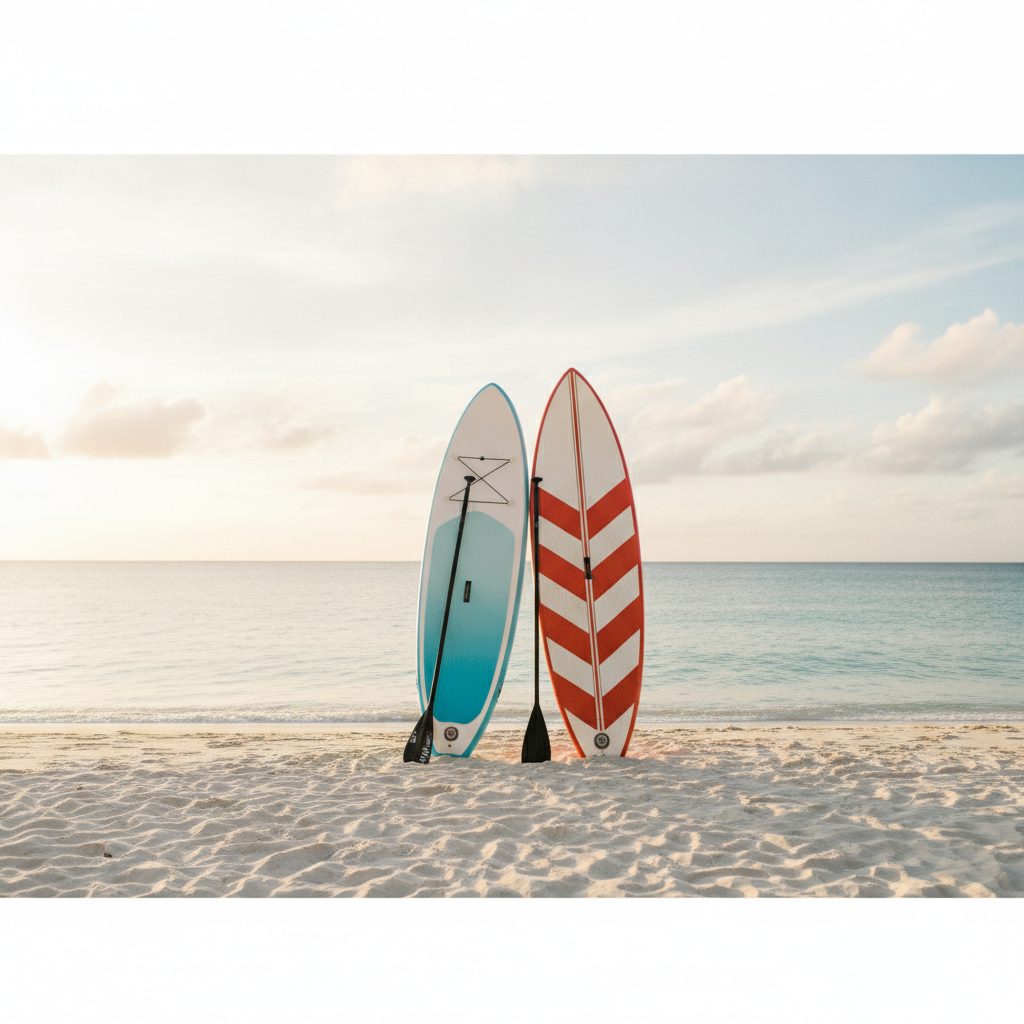
All-around, touring, yoga, surf, and fishing boards all look similar in photos but ride very differently.
- All-Around: Rounded nose, wide platform, forgiving. Best first board for calm water. Handles most conditions adequately without excelling at anything specific.
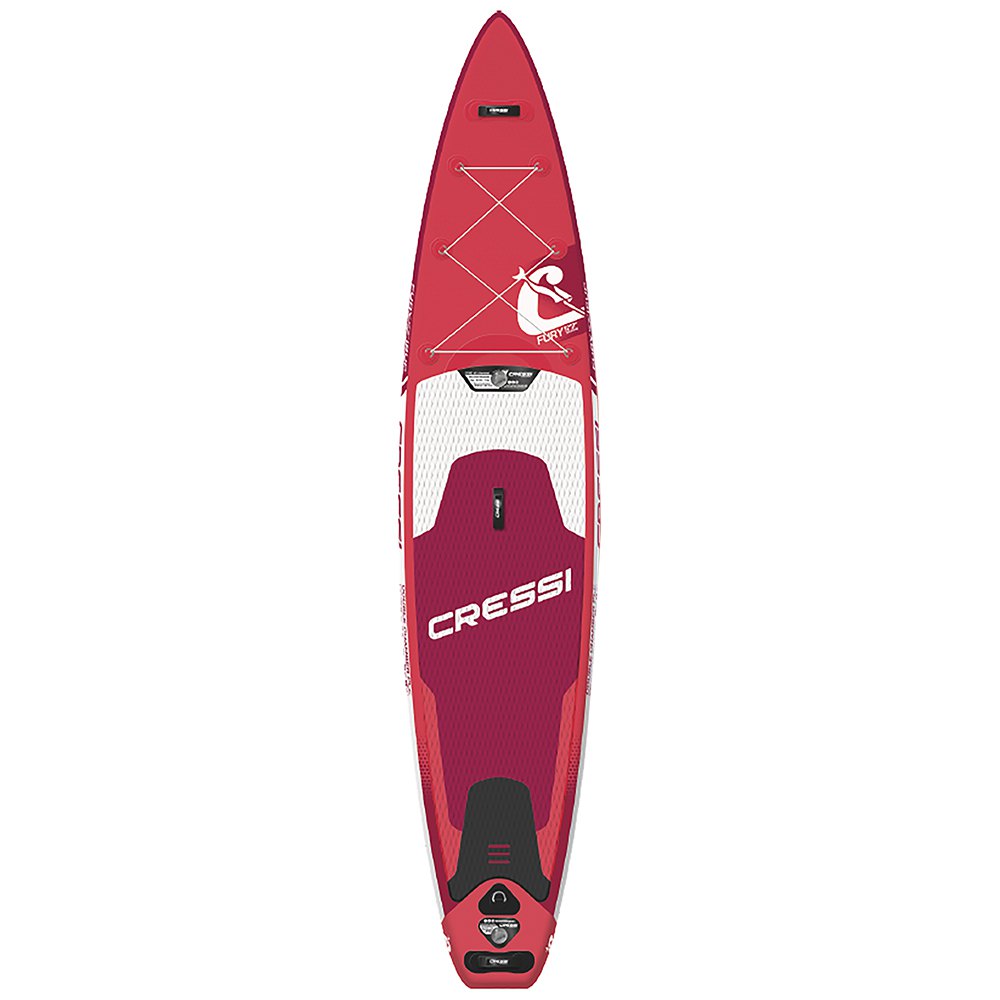
- Touring: Pointed displacement hull, narrower, longer. Built for covering distance efficiently. Harder to balance for raw beginners.
- Yoga/Fitness: Extra wide (34″–36″), sometimes with a full-deck pad. Stable platform for poses, but slow in the water.
- Surf/River: Shorter, more rockered nose for wave riding and whitewater. Not ideal for flat-water distance.
- Fishing: Extra-wide, reinforced mounts for rod holders and coolers. Very stable, very slow.
If this is your first board, an all-around is almost always the right choice. You can always specialize once you’ve developed a paddle habit.
Construction Quality: What Separates Good Boards From Pool Toys
Not all inflatables are built the same. The difference between a $150 Amazon special and a $700 quality board shows up immediately on the water — and in year two, when the cheap one delaminates.
Single-Layer vs Double-Layer Drop-Stitch
Single-layer: One layer of PVC fused to the drop-stitch core. Common on budget boards. Functional for light use, but more flex, less durability, shorter lifespan.
Double-layer (fusion or woven): Two PVC layers or a fused composite construction. Dramatically stiffer, heavier-duty, holds pressure better in heat. This is what you want for regular use.
What Else to Check
- Rail construction: Wrapped rails (extra layers at the edge) resist punctures and handle abuse
- Valve quality: Halkey-Roberts valves are the industry standard — avoid boards with proprietary valves you can’t service
- Seam finishing: Look for clean, reinforced seams with no bubbling or glue blobs in product photos
- Max pressure: Quality boards hold 15 PSI. Budget boards often cap at 10–12 PSI and feel spongy
What Comes in the Box — and What to Watch For
A complete paddle board package should include everything you need for your first session. Here’s what a proper kit looks like:
- Adjustable paddle: Should be aluminum or fiberglass at entry level, carbon for premium boards. Avoid fixed-length paddles — they’re usually a sign of a cheap kit.
- High-pressure pump: Manual double-action pumps are standard. A dual-action pump (inflates on both push and pull) cuts inflation time in half. Electric pumps are a worthwhile upgrade.
- Leash: A 10′ coiled or straight leash keeps the board attached if you fall. Non-negotiable for safety, especially in moving water.
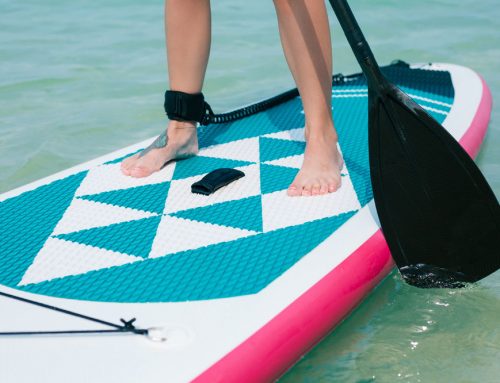
- Fins: Most all-around boards come with a center fin plus two smaller side fins (thruster setup). The center fin matters most — removable fin boxes let you swap for different conditions.
- Carry bag/backpack: Should fit everything comfortably with room to spare. Cheap bags fall apart at the zippers. Wheeled bags are worth the upgrade for travel.
If a package skips the leash or includes a single-action pump with no pressure gauge, factor in the cost of replacing those before comparing prices.
Budget Tiers, Brands Worth Trusting, and Where to Buy
Pricing across the full category is covered in depth at how much a paddle board costs, but here’s the fast version:
Budget Tiers
- Under $400: Entry-level single-layer inflatables. Fine for occasional use by lighter paddlers. Brands: Goosehill, SereneLife. Expect more flex and shorter lifespan.
- $400–$700: The value sweet spot. Double-layer construction, quality accessories, 2–3 year durability. Brands: iROCKER, BLACKFIN, Atoll, Bluefin. Best range for most buyers.
- $700–$1,100: Premium inflatables and entry-level hard boards. Stiffer, lighter, better accessories, longer warranties. Brands: Red Paddle Co, Starboard, Naish.
- $1,100+: Performance racing, high-end touring, carbon hard boards. Overkill for most beginners.
New vs Used
Used boards can be excellent value — a $700 board two years old might go for $350. Check for delamination (bubbles under the surface), seam separation, and valve integrity. Inflate it before buying. Avoid used boards with unknown history or deep surface cuts near seams.
Where to Buy
- Brand direct: iROCKER, Red Paddle Co, and Atoll all sell direct with good warranty support
- REI and outdoor retailers: Hands-on comparison, return policy, knowledgeable staff
- Amazon: Price competitive but vet carefully — filter to established brands and read 1-star reviews for patterns
- Local paddle shops: Best for hard boards, demos, and used inventory
For a curated breakdown of what’s actually worth buying right now, see our best paddle boards roundup.