Best Beginner Inflatable Paddleboard
The best beginner inflatable paddle board keeps you stable, survives your learning curve, and fits in a backpack when you're done.
If you’re just getting into stand-up paddleboarding, an inflatable is almost always the right call. They’re forgiving underfoot, shrug off dings against rocks and docks, pack into a bag the size of a large duffel, and cost less than hardboards of comparable quality. But not every iSUP is built the same — and as a beginner, a few wrong specs can make learning a lot harder than it needs to be. This guide cuts through the jargon and tells you exactly what to look for before you buy your first inflatable paddle board.
Why Inflatable Beats Hardboard for Beginners
Hardboard SUPs are fast and responsive — which is exactly why they’re unforgiving when you’re still finding your feet. An inflatable is the opposite: softer underfoot, more buoyant relative to volume, and built to take punishment without showing it.
Here’s what beginners actually benefit from with an iSUP:
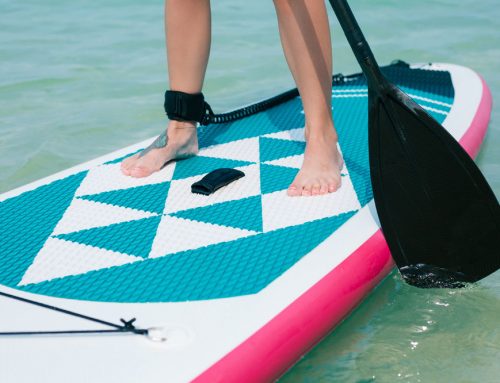
- Soft deck = softer falls. When you go in — and you will go in — landing on a foam deck pad feels nothing like cracking a shin on a fiberglass rail. That alone reduces the intimidation factor.
- Durable skin. Military-grade PVC doesn’t care about gravel launches, rocky shores, or a kayak paddle scraping the nose. Hardboards scratch, chip, and delaminate. iSUPs don’t.
- Stores anywhere. No roof rack, no garage space eaten up by a 10-foot board. Roll it up, stuff it in the bag, slide it under a bed.
- Easier to transport solo. A 10’6″ iSUP weighs 20–25 lbs and has a carry handle. A comparable hardboard is heavier, awkward, and needs two people or a roof rack system.
For a full breakdown of the category, see our guide to the best inflatable paddle boards across all skill levels.
The One Spec Beginners Always Overlook: Board Width
Width is the single biggest stability lever on a paddle board — more than length, more than volume. Beginners should target 32 to 34 inches wide. At that width, a board feels planted even when your balance isn’t perfect yet.
Many “beginner” boards are listed as 30 inches wide, which reads fine on paper but feels tippy until your core stabilizers develop. If you’re under 180 lbs, 32″ is workable. If you’re heavier, or if you want to paddle with a dog or a small kid, go 33–34″.
Length matters less than width for beginners. Most all-around iSUPs land between 10′ and 11′, which is the sweet spot — long enough for glide, short enough to turn without a wrestling match.
Drop-Stitch Construction and Why PSI Matters
An inflatable paddle board is essentially two PVC skins connected by thousands of interlocking polyester threads — that’s the drop-stitch core. When you inflate it, those threads pull the walls flat and create a rigid structure. The tighter the thread count and the higher the pressure, the stiffer the board feels underfoot.
Target 15–18 PSI for a beginner iSUP. Below 12 PSI, a board flexes noticeably in the middle when you stand on it (called “banana-ing”) — it wastes energy and feels unstable. Boards rated for 15+ PSI and pumped up fully feel close to a hardboard underfoot.
Construction tiers to know:
- Single-layer PVC: Budget-friendly, fine for casual use, slightly heavier for the same stiffness. Most sub-$400 boards are single-layer.
- Double-layer (fusion or woven): Stiffer, slightly lighter, longer-lived. Worth the upgrade if your budget stretches to $500+. Brands like Red Paddle Co, Bluefin, and iROCKER use this construction.
For a detailed walkthrough on pumping technique and pressure gauges, visit our PSI and inflation guide — it covers common mistakes that cause beginners to under-inflate.
What a Good Beginner Kit Should Include
Most beginner iSUPs sell as a “complete package” — and the quality of those included accessories varies wildly. Here’s what the kit should contain, and what to watch for:
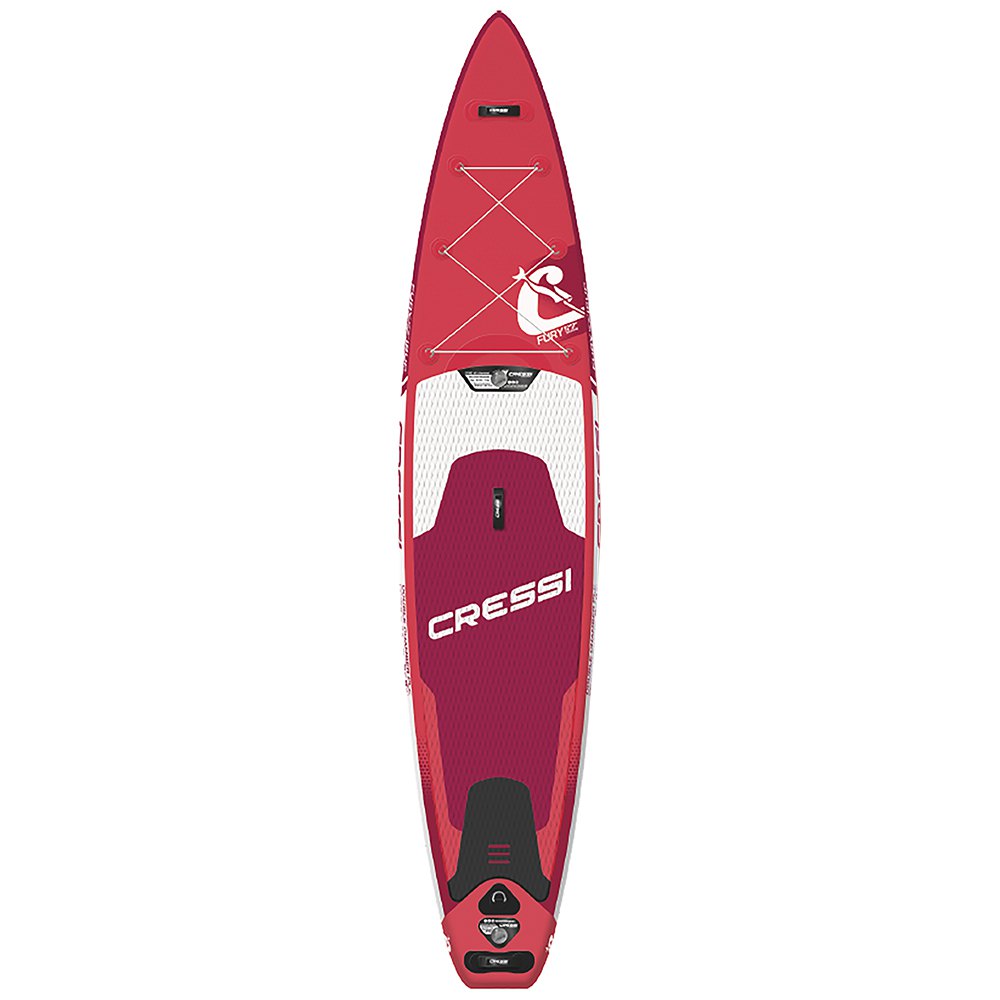
The pump: Every iSUP kit includes a hand pump. The difference is how many pumping chambers it has. A dual-action pump moves air on both the push and pull stroke — you reach target PSI in roughly half the strokes. Single-action pumps are slower and more exhausting. Look for dual-action. Better yet, look for a board that includes an electric pump, or budget $60–80 for a separate one.
The paddle: Included paddles range from usable aluminum to lightweight fiberglass or carbon. Aluminum is heavy (500–600g) — you’ll feel it after an hour. Fiberglass or carbon paddles (200–350g) transform the experience. If the kit paddle is aluminum, plan to upgrade within your first season.
The fin setup: A single large center fin is fine for flatwater all-around paddling. Three-fin setups (thruster) add tracking in chop. Look for tool-free fin boxes — fumbling with a screwdriver on a dock is a real annoyance.
The bag: A good rolling bag with padded shoulder straps makes the portability advantage real. A thin nylon stuff-sack negates it. Check that the bag actually fits the board, pump, paddle, and leash without a struggle.
Budget vs Mid-Range: Where to Set Your First iSUP Budget
The honest answer: you don’t need to spend $800 on a first inflatable paddle board, but going too cheap is a real risk.
Under $300: This tier exists, and some boards are rideable — but construction quality is inconsistent, included accessories are usually poor, and warranty support is thin. We don’t actively recommend this tier for anyone who expects to paddle more than a handful of times.
$300–$500 (budget sweet spot): This is where the first genuinely good beginner iSUPs live. Brands like Serene Life, Goosehill, and Atoll produce boards in this range with solid drop-stitch construction, adequate kits, and enough stiffness at proper PSI to feel stable. If budget is the primary constraint, start here.
See our best budget paddle boards guide for vetted picks under $500 with honest kit assessments.
$500–$800 (mid-range, first real upgrade): Brands like iROCKER, Bluefin, and Thurso Surf enter here. You get double-layer or fusion PVC, significantly better included paddles, electric pump options, and better warranty coverage (2–3 years). If you have any intention of paddling regularly, the mid-range pays for itself quickly.
$800+ (premium): Red Paddle Co, Starboard, and Fanatic dominate here. Justified for serious paddlers, but not a first-board decision — learn on something you can justify beating up.
What to Avoid When Buying Your First Inflatable SUP
The beginner iSUP market is crowded with boards that look fine in photos and disappoint on water. Watch for these red flags:
- Max PSI under 15: Usually signals thin single-layer PVC that can’t hold enough pressure for real stiffness. Check the spec sheet, not just the marketing copy.
- Width under 32″: Already covered — this is a real stability issue for beginners regardless of what the listing says.
- No weight capacity listed, or listed over 350 lbs on a budget board: Capacity numbers are often inflated. A board claiming 400 lbs capacity at $250 is almost certainly soft and flexed under real load.
- Generic no-name branding with no warranty: These boards are resold factory direct with no customer support. When seams fail six months in, you’re on your own.
- Included carbon fiber paddle at under $400: Real carbon paddles cost $100+ alone. A “carbon” paddle in a $299 kit is almost certainly carbon-wrapped foam or a thin veneer — check the actual weight spec.
- Glued fin systems with no tool-free option: Old-school US fin boxes require a flathead screwdriver and a small nut. Fine once you get used to it, but awkward as a beginner. Click-lock fin systems are meaningfully better.
For a broader look at quality markers across all iSUP types, our best paddle boards guide covers what separates strong construction from marketing claims.
How to Narrow Down Your Pick
Once you know the core specs — 32–34″ wide, 15+ PSI rating, drop-stitch core, dual-action pump — the decision usually comes down to budget and intended use.
Calm flatwater (lakes, slow rivers, bays): An all-around shape at 10’–10’6″ is ideal. Stable, easy to turn, versatile enough to paddle with kids or a dog once you get comfortable.
Light ocean or coastal paddling: Look for a board with a displacement nose (slightly pointed, not rounded) and a three-fin setup. This tracks better in open water and handles small chop more predictably.
Yoga or fitness paddling: Width matters most here — 33–34″ minimum, plus a full-length deck pad for grip when you’re moving around.
Starting with the right iSUP makes the learning curve shorter and the early sessions more fun. Get the width right, inflate it properly, and the rest comes with time on the water.