Advice For Paddleboarding With Kids
Paddleboarding with your kids is one of those activities that sounds intimidating but turns out to be one of the best things you can do together on the water.
Parents ask us this all the time: is paddleboarding safe for kids? The honest answer is yes — with the right setup, the right expectations, and a properly-fitted life jacket on every child, every single time. This guide walks you through what age kids can realistically start, how to ride tandem with a toddler, when to get them their own board, and how to keep the whole experience fun rather than stressful.
What Age Can Kids Start Paddleboarding?
There’s no single magic age, because kids develop at different rates and the conditions on the water vary widely. That said, here’s a practical framework most families find useful.
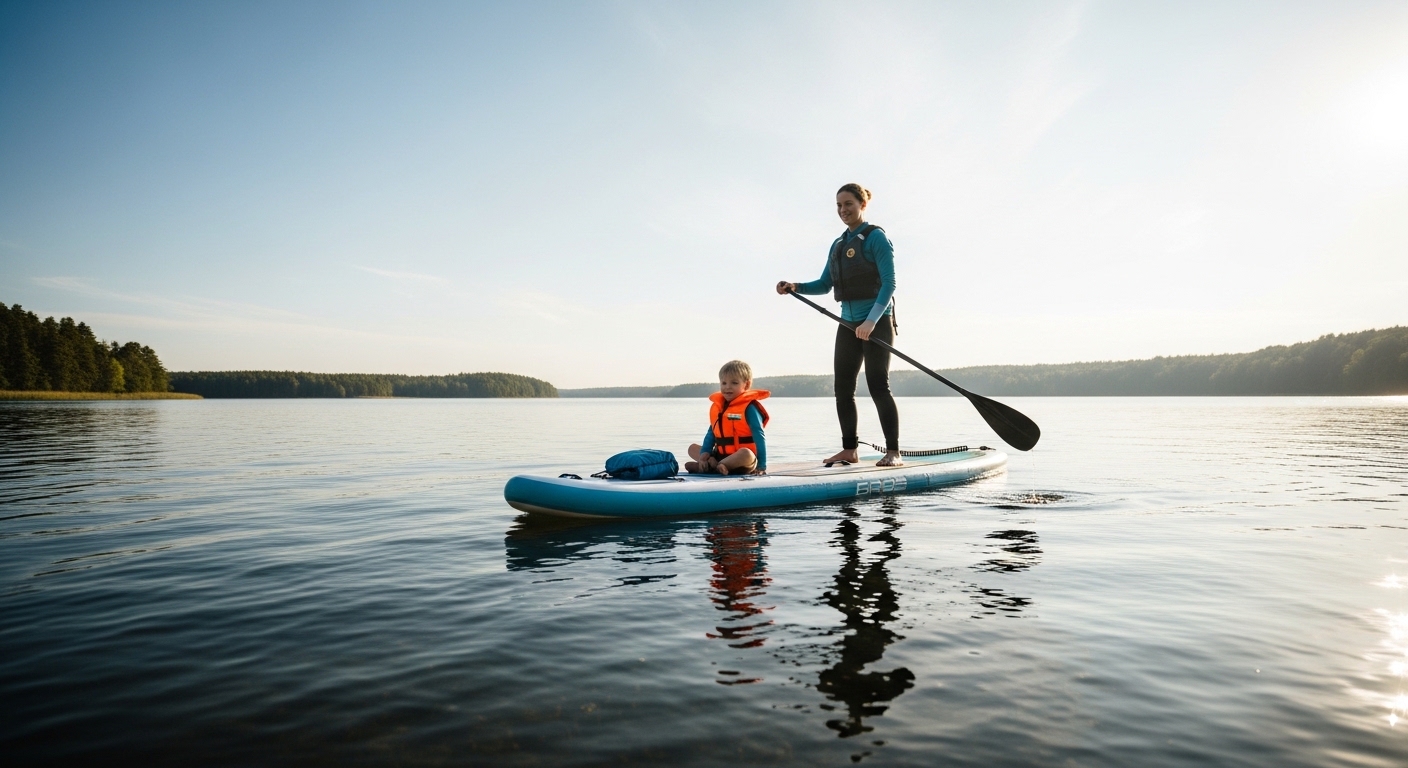
Toddlers (1–4 years): A toddler cannot and should not paddle independently, but they can absolutely come along for the ride. Many parents bring toddlers on a large, stable board — the child sits or kneels in front of the adult, often in a little inflatable boat or just on a grippy deck pad, while the adult does all the paddling. It works beautifully on calm, warm, shallow water, and little kids genuinely love it. The keys are a properly-fitted child PFD and staying in very calm conditions close to shore.
Early elementary (5–8 years): This is the age range where a lot of kids are ready to try paddling on their own — on a beginner-friendly board, in shallow calm water, with an adult right beside them on a second board or standing in the water nearby. Balance improves enormously in these years. Some kids are ready at five; others need until seven or eight. Follow your child’s lead rather than a checklist.
8–10 and up: By this age, many kids can comfortably handle a properly-sized kids’ board in calm conditions. They have the strength to paddle with purpose, the coordination to recover from small wobbles, and enough focus to follow simple safety rules. From here, paddleboarding can grow into a genuine lifelong skill.
None of this means younger kids can’t be on the water — it just means younger kids need more adult involvement and more conservative conditions. Learn more about paddle boarding as a family activity and why it works so well across so many ages.
Safety First: The Rules That Are Non-Negotiable
Every child wears a properly-fitted PFD every time — no exceptions. Not “most of the time.” Not “just for a few minutes.” A child PFD should be snug enough that you cannot lift it over their chin when you tug upward from the shoulders. Adult PFDs do not fit children safely. Buy a child-specific life jacket sized to your child’s weight and check the fit every season as they grow. This is the single most important piece of gear you own. Understand the full rules around life jacket rules before you head out.
Beyond the PFD, here’s what makes a session safe rather than scary:
- Calm, shallow, warm water. A glassy lake on a still morning is ideal. Choppy water, tidal currents, cold temperatures, and boat traffic are not beginner territory for kids. Pick boring water — it’s still beautiful, and it’s where confidence gets built.
- Leash. Kids should have a board leash appropriate to the conditions (coiled leash for flatwater). If they fall off, the board doesn’t drift away. On very young children, some parents attach the leash to themselves rather than the child — evaluate what makes sense for your situation.
- Stay close to shore. You should be able to stand up in the water and easily reach shore at all times when paddling with young kids. Staying within wading distance removes a huge category of risk.
- Check the weather before you go. Afternoon thunderstorms can develop quickly in summer. Wind can pick up and turn a serene lake into something much more challenging. Check the forecast and be willing to reschedule. Kids understand “not today, the weather isn’t right” — they just need to hear it honestly.
- Know how to get back on a board. If you’re going with older kids who may paddle independently, practice falling off and climbing back on in shallow water before they’re out where it matters. Turn it into a game. Knowing they can do it takes the fear away.
Riding Tandem With a Young Child
Tandem paddleboarding with a toddler or preschooler is genuinely wonderful. Here’s how to make it work well.
Where they sit: The safest and most stable spot for a small child is in front of you, toward the nose of the board but not at the very tip. Many parents let their child sit cross-legged on the front third of the deck pad. Some kids prefer to kneel; others want to lie on their belly and look into the water — all of that is fine in calm conditions. What you want to avoid is the child standing up and trying to shift around unpredictably.
Board choice matters: You want the widest, most stable board available for tandem use. Inflatable boards in the 11–12 foot range with wide decks work extremely well for families. Check out our guide to best 2-person paddle boards for boards specifically designed to carry two people — they’re built to handle the extra weight and provide the stability you need.
Keep your own energy calm. Kids read adults. If you’re tense and gripping the paddle hard, they’ll feel it. Breathe, take slow smooth paddle strokes, narrate what you’re seeing — “look at that fish!” — and the session becomes an adventure rather than a test. If you wobble, say “whoa, that was fun” and keep going. How you react to small instabilities teaches them how to feel about them.
Short sessions to start. Fifteen to twenty minutes on the water is plenty for a toddler’s first few times. End on a high note while they’re still having fun, and they’ll ask to go again. Push past the fun point and you’ll hear about it next time you suggest the paddleboard.
If you’re new to paddleboarding yourself, read our how to paddleboard guide first so you’re confident on the board before adding a small passenger.
Getting Kids Their Own Board
When your child is ready to paddle on their own — typically somewhere between 5 and 10 years old depending on the kid — the board choice makes an enormous difference in how quickly they succeed and how much they enjoy it.
Size it down. A child does not belong on an adult 10’6″ board. It’s too long, too heavy, and too hard to maneuver. Look for boards in the 7’–9′ range for younger kids. Many brands make boards specifically for children — they’re shorter, narrower enough to be manageable, but still stable enough to stand on without constant corrections.
Inflatable vs. hard: For most families, an inflatable board is the smarter choice for kids. They’re lighter to carry, gentler on the shins when a board hits them on a fall, easier to store, and durable enough for years of use. The tradeoff in performance is negligible at a kid’s skill level.
Stability over everything else: A wider board with a flat or rounded bottom forgives mistakes. Kids are still developing their balance and their paddle stroke. Give them a board that keeps them on top of the water while they figure things out, not one that teaches them to fall.
Weight capacity matters: Kids grow fast. Buy a board with a weight capacity that leaves room for growth through the next few years rather than one that’s right for them today.
Making It Fun, Not a Lesson
The fastest way to get a kid to love paddleboarding is to stop trying to teach them paddleboarding. Seriously.
Kids don’t care about proper paddle grip. They care about splashing, looking at fish, racing you to the dock, and seeing if they can stand up without holding on. Let them do those things. The technique follows naturally as their body figures out what works.
Some ideas that actually get kids excited:
- Give them a mission. “Let’s paddle to that big rock and see what’s around the other side.” Destination motivation is real for kids.
- Make falling into the game. “First one to fall in wins a point.” Suddenly falling isn’t a failure, it’s just part of the game.
- Let them bring something. A small waterproof bag with a snack and a water bottle goes a long way. They’re paddleboarding to their picnic spot.
- Go at their pace. If they want to sit and just float for ten minutes and stare at clouds, float and stare at clouds. Not every paddle session needs to cover distance.
- Never shame a fear. Some kids take one look at the water and freeze. That’s okay. Sit on the board at the shore. Then move to ankle-deep water. There’s no rush. Forcing a scared kid onto the water teaches them that paddleboarding is something scary adults make them do.
Building Confidence Over Time
Confidence on the water builds in layers, and the timeline is different for every child. The pattern that works well across most ages looks something like this:
Session 1–3: Sitting on the board, close to shore, adult in the water or right beside them. No pressure to stand. Just get comfortable with the feeling of a floating surface.
Session 4–6: Kneeling and trying a few paddle strokes. The board moves — that’s exciting. Falling in on purpose to prove they can get back on.
Session 7+: Standing up, paddling short distances, starting to develop a sense of steering. From here, progress tends to happen quickly because they believe they can do it.
The biggest confidence-builder is not instruction — it’s repetition in conditions that feel safe. Every time they get on the board and have a good time, they file that away. By their tenth session, the board feels familiar and the water feels friendly. That’s the whole goal.
Celebrate specific things rather than vague praise. “You got back on the board three times” lands better than “great job.” It tells them you saw what they actually did.
Gear Checklist for Paddleboarding With Kids
You don’t need a lot of gear. You need the right gear, in good condition, that actually fits.
- Child PFD — properly fitted, US Coast Guard approved. This is the non-negotiable item. Check fit before every season. See the full breakdown of life jacket rules so you know exactly what “approved” means.
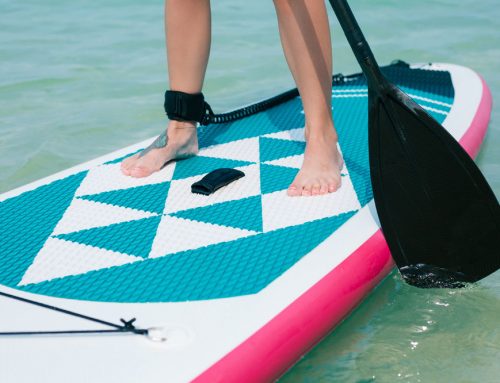
- Ankle leash (flatwater coil). For any child paddling independently on flatwater.
- Sun protection. Kids burn fast on the water. Rash guard, reef-safe sunscreen applied before they get on the board (not after), and a hat that stays on in a light breeze.
- Water and snacks. Short sessions feel long when someone is thirsty. Bring more water than you think you need.
- Footwear. Water shoes protect feet at the put-in and on rocky shores. Optional but worth it.
- A whistle on the child PFD. Required by law in many states for children on the water. Most child PFDs have an attachment point. A simple plastic whistle costs almost nothing and is genuinely useful if you’re ever separated.
- An appropriate board. Sized for your child’s age and weight, stable enough for their current skill level, in good condition (check inflation on inflatables before each session).
Keep the setup simple, keep the conditions calm, and let the water do the rest. Families that paddleboard together consistently find it becomes one of those activities everyone genuinely looks forward to — and that’s exactly what it should be.
Frequently Asked Questions
What age can kids start paddle boarding?
Does my child need a life jacket to paddleboard?
Can a toddler ride on a paddleboard with me?
What size paddleboard is right for a child?
What's the safest water for kids to paddleboard on?
My child is scared of the water. Should I still try paddleboarding?
Best 2-person boards →Life jacket & USCG rules →Family paddle boarding →How to paddleboard →