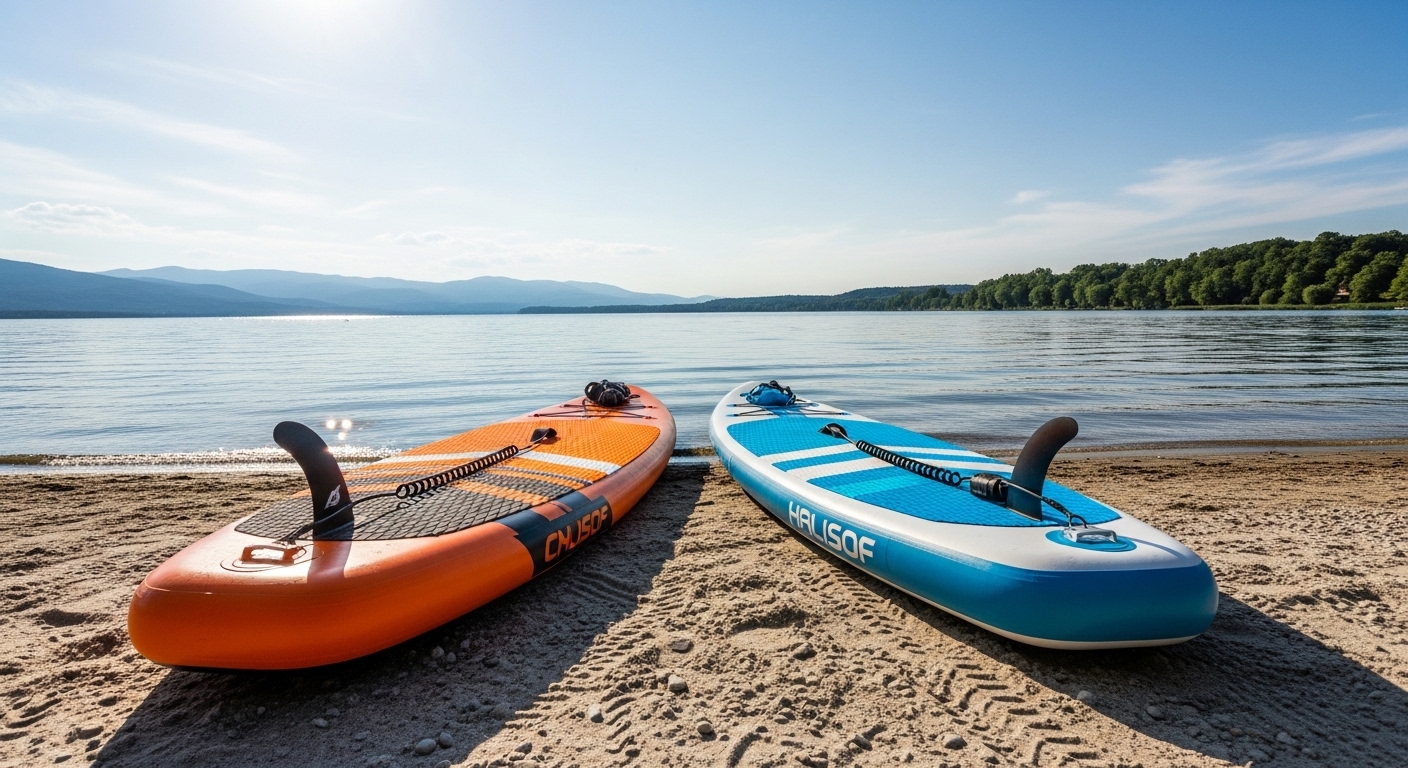
Advantages between Isle and iRocker Paddleboard
Two great brands. Different strengths. Here's how to pick the right one for you.
If you’ve spent any time comparing inflatable paddle boards, you’ve probably landed on the same two names: ISLE and iRocker. Both are legit, well-reviewed brands — but they’re not interchangeable. Each has real, specific advantages over the other, and the best pick depends entirely on what you’re actually going to do with the board. This isn’t a full spec-by-spec breakdown — for that, check our full iRocker vs ISLE comparison. What this article does is simpler: tell you, plainly, what each brand does better and which type of paddler should buy it.
Where iRocker Has the Clear Edge
iRocker wins on a few things that matter a lot to certain buyers, and they’re worth calling out directly.
Higher weight capacity. Most iRocker all-around boards are rated for 300–400 lbs. That’s meaningfully higher than comparable ISLE boards, which typically top out around 275–300 lbs. If you’re a heavier rider, plan to bring a kid or a dog, or just want extra rigidity under load, iRocker’s capacity margins give you real peace of mind. This is probably iRocker’s single biggest functional advantage for a wide slice of buyers.
Everything-included kits. iRocker bundles a backpack, pump, paddle, fin, leash, and repair kit with every board — and the quality of those accessories is noticeably above average. The pump inflates fast, the paddle adjusts smoothly, and the backpack actually fits the board comfortably. ISLE includes accessories too, but iRocker’s kit is more complete and better-executed right out of the box.
Frequent, deep sales. iRocker runs aggressive seasonal promotions — Black Friday, holiday weekends, and mid-season clearance events. It’s not unusual to see flagship boards discounted $100–$150. If you’re not in a rush, waiting for a sale is a legitimate strategy that can shift the value equation significantly in iRocker’s favor.
The BLACKFIN line for serious paddlers. iRocker’s BLACKFIN sub-brand offers premium construction — dual-layer PVC, carbon handles, reinforced seams — at prices that still undercut many boutique SUP brands. If you want a genuinely high-end inflatable without paying $1,200+, BLACKFIN is worth a serious look. See our iRocker brand review for a closer look at how the BLACKFIN models stack up.
Where ISLE Has the Clear Edge
ISLE doesn’t try to compete on raw specs — it wins on a different set of priorities.
Lighter boards. ISLE consistently builds lighter boards than iRocker at similar sizes. A typical 10’6″ ISLE all-arounder weighs around 17–19 lbs versus 20–25 lbs for iRocker equivalents. That difference shows up when you’re hiking to a launch site, loading a roof rack solo, or hauling gear from the car to the water. For smaller paddlers or anyone who values portability, lighter is genuinely better.
Cleaner, sleeker design. ISLE boards look more premium. The color palettes are more restrained, the deck pad layouts are more thoughtful, and the overall aesthetic reads closer to a boutique brand than a mid-market value play. That matters if you care about how the board looks on the water or in photos. It’s not superficial — design quality often signals attention to detail in other areas too.
The Switch hybrid board. ISLE’s Switch is a convertible SUP-kayak that comes with a detachable seat and a dual-blade paddle. It’s a genuinely useful design for paddlers who want the option to sit down — for longer trips, calmer exploration, or days when standing just isn’t appealing. iRocker doesn’t have a direct equivalent that’s as well-executed. If hybrid functionality is on your wishlist, ISLE wins this category outright.
A simpler, less overwhelming lineup. ISLE offers fewer SKUs, which makes decisions easier. iRocker’s catalog is deep and detailed, which is great if you love comparing specs — but if you just want to pick a good board and be done with it, ISLE’s cleaner lineup is less fatiguing to shop.
Value-for-Money: The Honest Breakdown
Both brands sit in the $600–$900 range for their core all-around boards, so neither is a budget brand in the traditional sense. But the value story is different depending on what you’re measuring.
iRocker delivers more hardware per dollar. When you factor in the quality of the included kit and the board’s capacity specs, iRocker tends to win on raw value math — especially during a sale. You’re getting a higher-capacity board with a better accessory package at a competitive price.
ISLE delivers more refinement per dollar. You’re paying for lighter construction and better aesthetics. The accessories are slightly simpler, but the board itself often feels more premium to paddle. For buyers who care about the feel and look of the product more than the spec sheet, ISLE justifies its price point differently.
Neither is overpriced. Compared to what boutique brands charge for similar build quality, both iRocker and ISLE represent strong value. The decision isn’t really “which is cheaper” — it’s “which advantages matter to me.”
Buyer Profiles: Which Brand Fits You
Here’s the clearest way to think about it:
Best for beginners: iRocker. The all-in-one kit means you don’t have to think about accessories. The extra capacity forgives bad balance on rough days. And the price-to-feature ratio is hard to beat when you’re just starting out and don’t want to overspend on something you might outgrow.
Best for heavier riders (200+ lbs, or paddling with passengers): iRocker, clearly. The capacity advantage is real and practical. A board that’s loaded near its limit gets soft and unstable — iRocker’s higher ratings give you a meaningful buffer.
Best for budget-conscious shoppers: iRocker, especially on sale. The kit value is higher and the sales are better. If you’re price-sensitive, set an iRocker sale alert and wait.
Best for design-conscious buyers: ISLE. If you want a board that looks as good as it performs and you’re willing to sacrifice a little on the spec sheet, ISLE’s aesthetic is the clear winner.
Best for smaller or lighter paddlers: ISLE. The weight savings matter more when you’re already managing a lighter load. A 19 lb board versus a 24 lb board is a bigger deal at 130 lbs than at 200 lbs.
Best for hybrid SUP-kayak use: ISLE Switch, no contest. If you want to be able to sit down and use a kayak paddle, the Switch is the cleanest solution in this price range.
For a full breakdown of specs, construction, and side-by-side model comparisons, see our full iRocker vs ISLE comparison — that’s where we get into the fine print. You can also browse our paddle board brand comparison if you want to see how both stack up against the wider market.
The One Question That Decides It
After testing both brands extensively, we’ve found that most buyers can settle this with one honest question: Do I need the extra capacity and kit value, or do I want a lighter, sleeker board?
If the answer is capacity and kit — iRocker is your brand. Their boards carry more weight, come with better accessories, and go on sale often enough that the price point becomes very competitive. The BLACKFIN line gives you a genuine premium upgrade path if you fall in love with paddling and want to invest more later.
If the answer is lighter and sleeker — ISLE fits your priorities better. You’ll carry the board more easily, it’ll look sharper on the water, and if the Switch hybrid appeals to you, there’s nothing comparable from iRocker at a similar price.
Both are good brands. Neither is a wrong answer. This is a matchup between two different philosophies about what makes a great paddle board — and the right one for you comes down to which philosophy matches how you actually paddle.
Bottom Line
iRocker wins on: weight capacity, accessory kit quality, sale pricing, and the BLACKFIN premium tier.
ISLE wins on: board weight, design aesthetics, the Switch hybrid option, and lineup simplicity.
Neither brand is universally better — they’re built for different buyers. Use the profiles above to figure out which set of advantages actually matters for how you paddle, and you’ll make the right call. Check out our iRocker brand review for a deeper look at the full iRocker lineup, or our paddle board brand comparison to see how both brands compare to the rest of the market.